What is a safety file?
A health and safety file (usually called a safety file) is the organised collection of documents that shows how a business manages health and safety: who is responsible, what the risks are, how they are controlled, and the records that prove it is actually happening.
Does my business need a safety file?
What goes into a safety file?
Tick off what you already have. The exact contents depend on your work and your client's requirements, but most files include these sections.
Want a fuller picture? Get your free compliance score in 3 minutes →
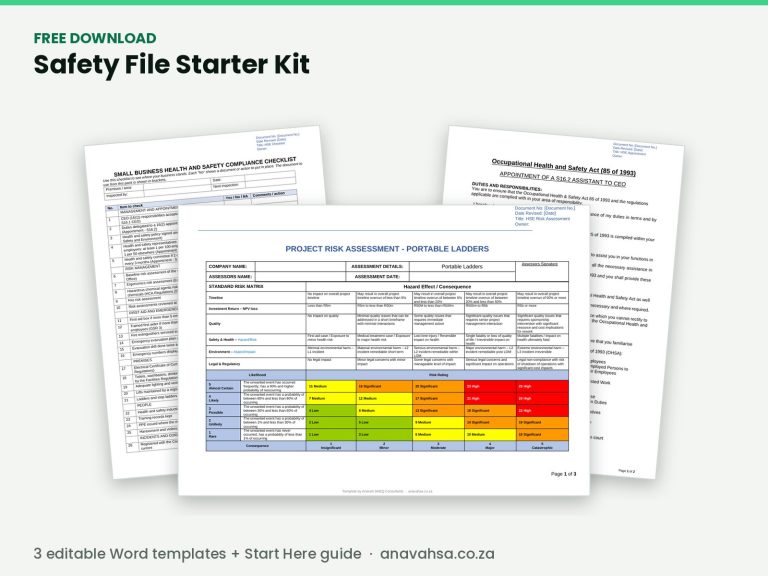
A 32-point compliance checklist, a Section 16(2) appointment letter and a ladder risk assessment, editable in Word. Name and email only, no payment details.
How to compile a safety file
Common safety file mistakes
Frequently asked questions
Is a safety file a legal requirement?
On construction sites, yes: Construction Regulation 7 requires the principal contractor and every contractor to open and keep a health and safety file on site, available to an inspector, the client and the principal contractor. In other workplaces the law doesn't use the words "safety file", but the OHS Act and its regulations require the documents that make up the file, such as risk assessments, appointments, training records and incident records. Keeping them together in one file is the easiest way to prove compliance.
I only have a few employees. Do I need one?
Yes. The OHS Act applies to every employer, whatever the size. A small business needs a smaller, simpler file, but the basics are the same: a policy, appointments, a risk assessment, first aid, an emergency plan and incident records. Some requirements only start at certain numbers, for example a first aid box with more than 5 employees and H&S representatives with more than 20.
What is the difference between a client's safety file requirements and the law?
Clients often ask contractors for more than the law requires, through their health and safety specification. Your file must meet both: the law, and the client's specification for that project.
Who should compile the safety file?
The employer is responsible. Many businesses ask a health and safety consultant to compile it the first time, then keep it up to date themselves with the consultant's support.
Can I use templates?
Yes, templates save a lot of time, but they are a starting point. Add your company details, remove what doesn't apply, and make the risk assessments and procedures match your actual work.
How often must I update it?
Review it at least once a year, and whenever the work, the people, the equipment or the law changes, or after an incident. On construction projects the file is a living document that grows every day.
Can the file be electronic?
An electronic file is fine for most workplaces, as long as it is organised, signed documents are available and you can show it to an inspector or client when asked. On construction sites, keep the file physically available on site.
How long must I keep the records?
Keep incident records for at least three years, as the General Administrative Regulations require. Some records, such as medical surveillance records for hazardous chemical exposure, must be kept much longer. When in doubt, keep them.
This guide is general information based on the Occupational Health and Safety Act 85 of 1993 and its regulations. It is not legal advice. Requirements depend on your work and your client's specifications.